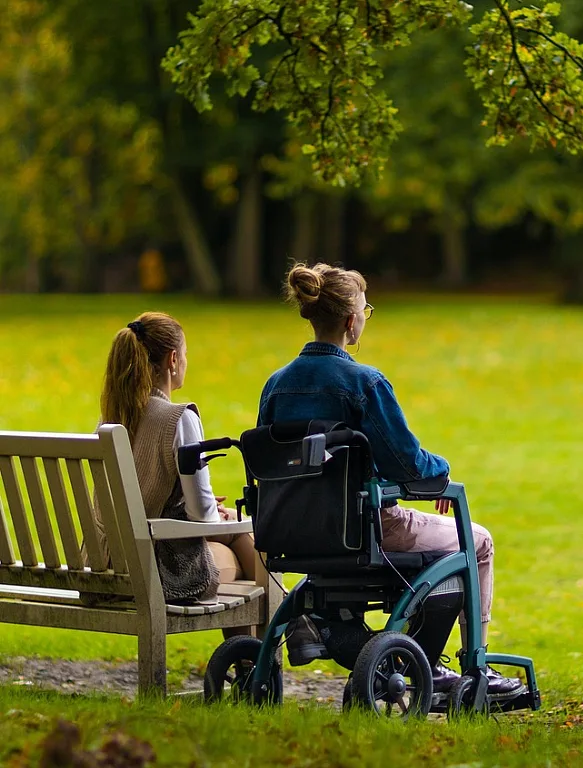
People with disabilities
People with physical or mental impairments are often less able to adapt to heat, so the need for support may increase.
Heat can lead to an increase in physical and psychological impairments.
Depending on the cause of the disability, the body may be limited in its ability to regulate body temperature, increasing the risk of overheating.
People with disabilities often take medication. Some medications put additional strain on the circulation or exacerbate dehydration.
Dehydration
You can recognise dehydration by these signs:
- Thirst
- Dry mouth and mucous membranes
- Headache, dizziness, weakness
- Little urge to urinate
- Dark urine
- Confusion
- Heart palpitations
- Muscle cramps
Heat protection
In addition to our general tips, you can protect yourself from heat in this way:
- Drink small amounts regularly: water, isotonic drinks, diluted juices or broth.
- Make sure you wear airy, light-coloured clothing and sun protection.
- To cool down, use a foot bath with water or place a cool washcloth on your forehead or neck.
- Ask your doctor what you need to be aware of in the heat.
- Have your medication checked by your family doctor.
- Observe the storage instructions of the medication.
- Check the skin daily, if necessary, to avoid infections.
- Ask those around you for support with everyday things.


 language
 Deutsch