Care-dependent people
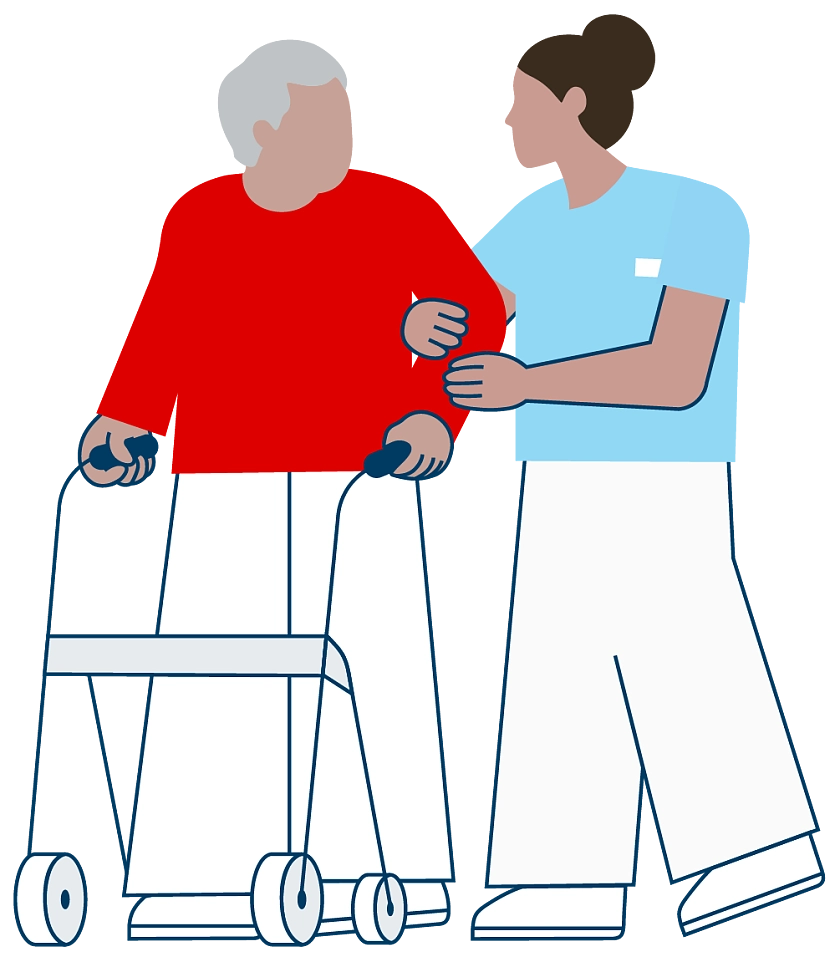
Care-dependent people rely on help and are often no longer able to protect themselves sufficiently from the heat. They need support with protective measures, such as drinking, and may not recognise the warning signs the body sends out themselves.
Dependence on care is often associated with older age. At the same time, the body is less able to adapt to heat with increasing age. The sensation of thirst decreases, as does sweat production. This increases the risk of overheating and of dehydration.
Limited mobility has a negative impact on adaptation to the heat. For example, it is no longer so easy to leave a hot apartment and look for a cool place.
Acute or chronic illnesses can also make it harder for the body to adapt to the heat.
Care-dependent persons often take medication. Some medications put additional strain on the circulation or exacerbate dehydration
Dehydration
You can recognise dehydration by these signs:
- Thirst
- Dry mouth and mucous membranes
- Headache, dizziness, weakness
- Little urge to urinate
- Dark urine
- Confusion
- Heart palpitations
- Muscle cramps
Heat protection
This is how you can protect care-dependent people from the heat:
- Offer drinks regularly: every 30-60 minutes
- Use a drinking reminder, such as a drinking app, alarm clock, voice assistant.
- Make the amount you drink visible, e.g. by setting yourself out a container with a certain capacity in the morning or keeping a tally of the glasses or cups you drink.
- Create variety with diluted fruit juices or broths.
- Adjust the meal plan: offer light, water-rich dishes, such as salad. Avoid heavy, fatty foods.
- Ensure airy, light-coloured clothing and sun protection.
- To cool down, use a foot bath with water or a cool washcloth on the forehead, wrists or neck.
- Have your medication checked by your family doctor.
- Observe the storage instructions of the medication.
- Ask about the person’s physical condition and look for signs of dehydration and symptoms of heat-related illnesses.
- If the person is bedridden, use only a sheet and as few pillows as possible.
- Use mesh pants with an insert instead of a disposable brief.
- A daily skin check should possibly be carried out to avoid infections.


 language
 Deutsch