


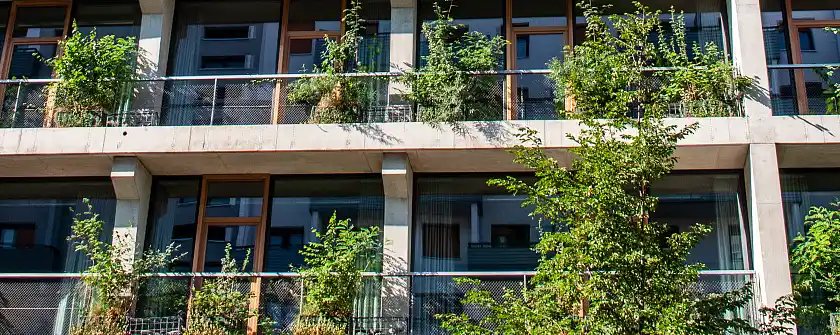
Summer thermal insulation ensures that the interiors do not heat up so much due to the high temperatures on hot days and that the body and health are less stressed. Especially for a restful sleep, it is important that temperatures in the bedroom do not get too high.
Below you will find measures that you as a homeowner and in some cases also as a tenant can implement to protect the interior of your home from heat. For effective heat protection, it makes sense to combine different measures.

It's not a good idea to cool living spaces with a air conditioner. These units emit a lot of heat, which further warms the surrounding area. Furthermore, air conditioners consume a lot of electricity and refrigerant, thus contributing to climate change and the increasing frequency of hot days.
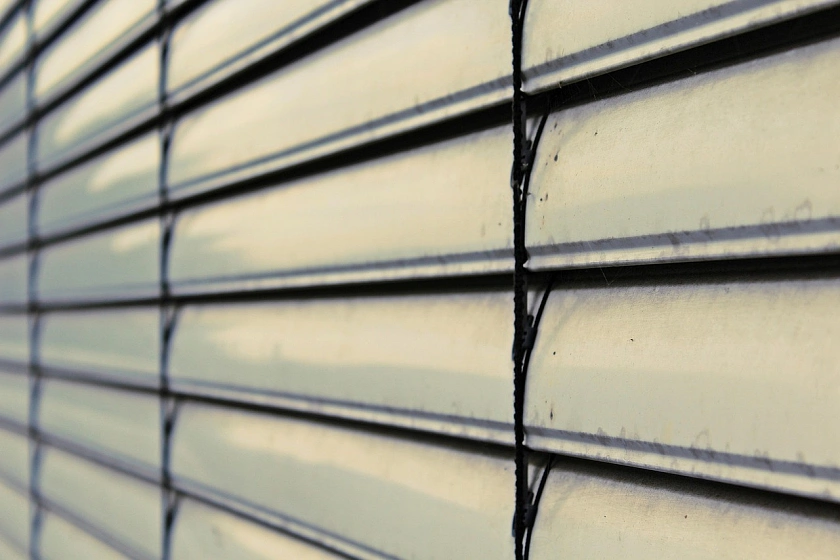
External sun protection is a sunshade that is installed on the outside of the building in front of the window to stop the sun shining directly into the house. It is a very effective measure to protect against heat, as it keeps the sun away from the window and thus prevents heat from entering the building in the first place. The space behind the shade remains much cooler. There are various ways to implement external sun protection. Examples include:
External sun protection has other advantages. It also functions as thermal insulation that protects against too much warmth from heating being lost in winter. Lowered roller shutters also act as additional noise protection.
Internal sun protection is installed inside the room, i.e. behind the window, to protect against sunlight. Here, too, there are various examples of implementation:
Since the sun protection is on the inside, the air between the window and the sun protection is heated by the sun, meaning that the heat does get into the room. Internal sun protection is therefore less effective against heat than external sun protection.
Solar control glass is a special window glass. It keeps some of the sunlight and heat at bay, meaning that less heat and sun enter the building and the interiors remain cooler. One disadvantage is that the glass also lets less light through and the interior becomes darker. How much light is let through depends on the type of solar control glazing. When choosing solar control glazing, you should therefore look for a suitable balance between thermal insulation and light transmission.
Triple-glazing insulates better than double-glazing. This means that triple-glazing is not only better at storing heat in the house in winter but also keeps the heat out better in summer
If the outer walls of a house are not insulated, the walls heat up intensely under the sun’s rays and then release this heat into the interior.
The sun usually shines on the roof all day. A roof without insulation heats up quickly and then releases the heat inside. Insulating the roof prevents this and ensures that the attic heats up less. Therefore, it is important to insulate the roof well and thus prevent the roof from getting very hot and the heat from getting inside. When it comes to roof insulation, it is important to choose a suitable thickness in order to obtain sufficient heat storage capacity.
Ventilating at night cools the building down by exchanging the warm air inside with an air flow with cold air from outside. A distinction is made between free, mechanical and hybrid night ventilation.
In the case of free night ventilation, the building is cooled by natural through/cross ventilation. The air flows through windows or ventilation openings. Ventilation can take place both within one floor and over several levels. In the case of night ventilation over several levels, the so-called chimney effect is used. For example, the stairwell can be used for this sort of air flow. In order to implement free night ventilation, building technology is installed that controls the mechanical windows or ventilation openings at certain times of the day or outside temperatures.
Ventilation systems are used for mechanical night ventilation, which specifically suck in cold air from the outside and distribute it throughout the building. To this end, a ventilation concept must be created in advance that takes the entire building into account and thus enables targeted control of the air flows.
A combination of free and mechanical night ventilation is also possible. This is referred to as hybrid night ventilation.
A heat pump heats the interiors in winter. In summer, it is possible to use the heat pump to cool the building. However, the prerequisite for this is that the heat pump is not used with conventional radiators. Depending on the heat pump system, the excess heat from the building is released into the air, ground or water.
In passive cooling, the water from the heat pump system is cooled by the low temperatures in the ground or groundwater. This water is then used to cool the rooms, either via underfloor heating or fan heating systems.
Air-source heat pumps, on the other hand, release the excess heat into the ambient air via a compressor. It is an active cooling system for which electrical energy must be used.
Because the sun moves from east to west and is never in the north, rooms that face north will stay cooler. East-facing rooms do not warm up as much either, since the sun is much weaker in the mornings. Moving the bedroom to a room that faces north or east will help you to be able to sleep well at night despite the heat.
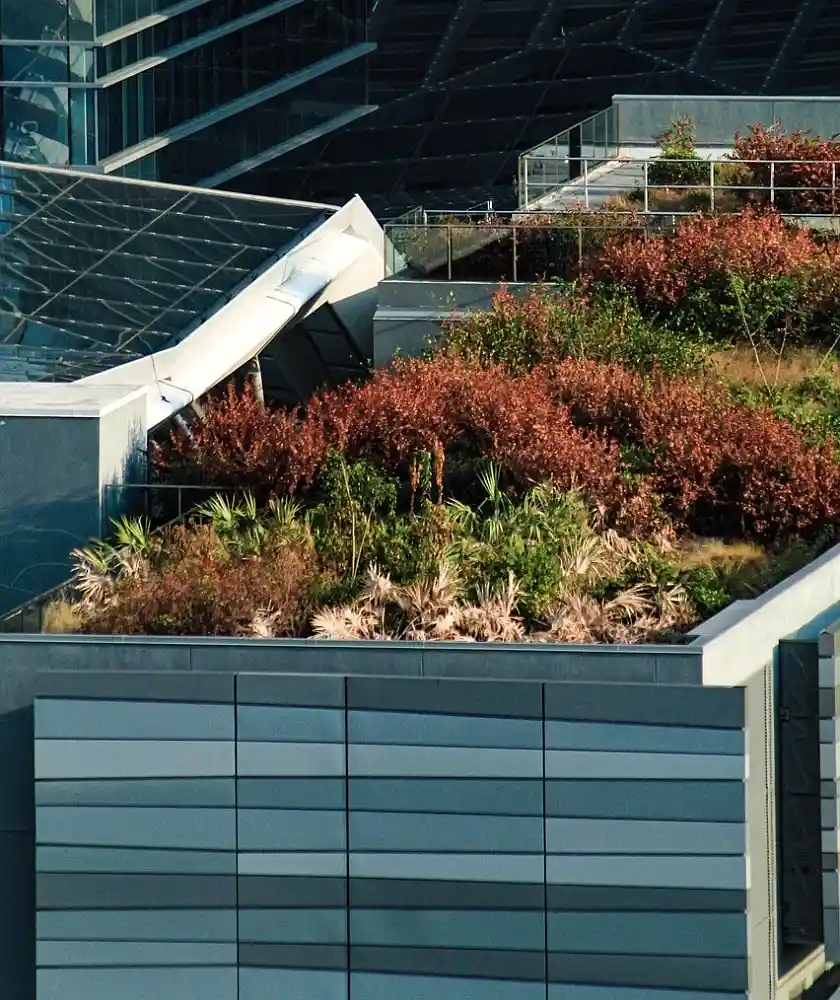
A green roof protects the building from heat in summer, as it acts as insulation and therefore means that the roof and thus also the interior heat up less. At the same time, green roofs cool the ambient air by retaining rainwater, with the leaves of the plants then evaporating water. They thus make an important contribution to reducing urban heat island effects. A distinction is made between extensive and intensive greening.
| Attribute | Extensive green roofs | Intensive green roofs |
|---|---|---|
| Installation height | 6-15 cm | over 15 cm |
| Statics | 40-150 kg/m² | 150-1200 kg/m² |
| Roof pitch | 0-45 ° | 0-5 ° |
| Plants | Grasses, herbs, succulents | No restrictions. Trees and shrubs are also possible. |
| Care | Low effort | Very high effort |
The Bremer Landesbauordnung stipulates that flat roof areas of a total of 50 square metres in new buildings must generally be greened extensively and permanently. Permissible exceptions to this are described here. hier
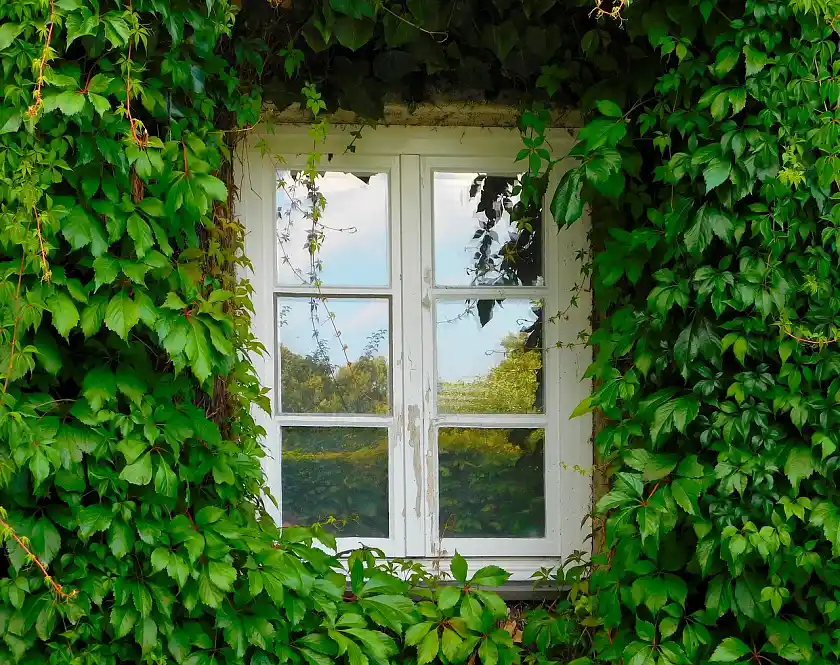
Just like green roofs, a green facade reduces direct sunlight on the building and thus protects the interior from heat. In addition, facade greening cools the ambient air through the evaporation of water from the plants. There are various systems for facade greening. A distinction is made between ground-based, trough-based and wall-based greening.
| Attribute | Ground-based greening | Wall-based greening | Trough-based greening |
|---|---|---|---|
| Principle | Plants take root in the ground and grow up the facade | Plants grow directly in modules on the wall | Plants grow in plant troughs on or in front of the facade |
Construction | Trellis supports, rope systems or self-climbers | Wall modules with substrate, irrigation and support plates | Plant troughs with trellis supports |
| Plants | Climbing plants: ivy, wild vine, clematis | Perennials, grasses, small woody plants, ferns | SPerennials and climbing plants: ivy, wild vine, clematis |
| Care | Low to medium effort | High effort | Medium effort |
| Costs | Low | Very high | Medium |

Das Förderprogramm Schwammstadt unterstützt Grundstückseigentümer:innen in Bremen und Bremerhaven bei der Begrünung von Dächern und Fassaden.